
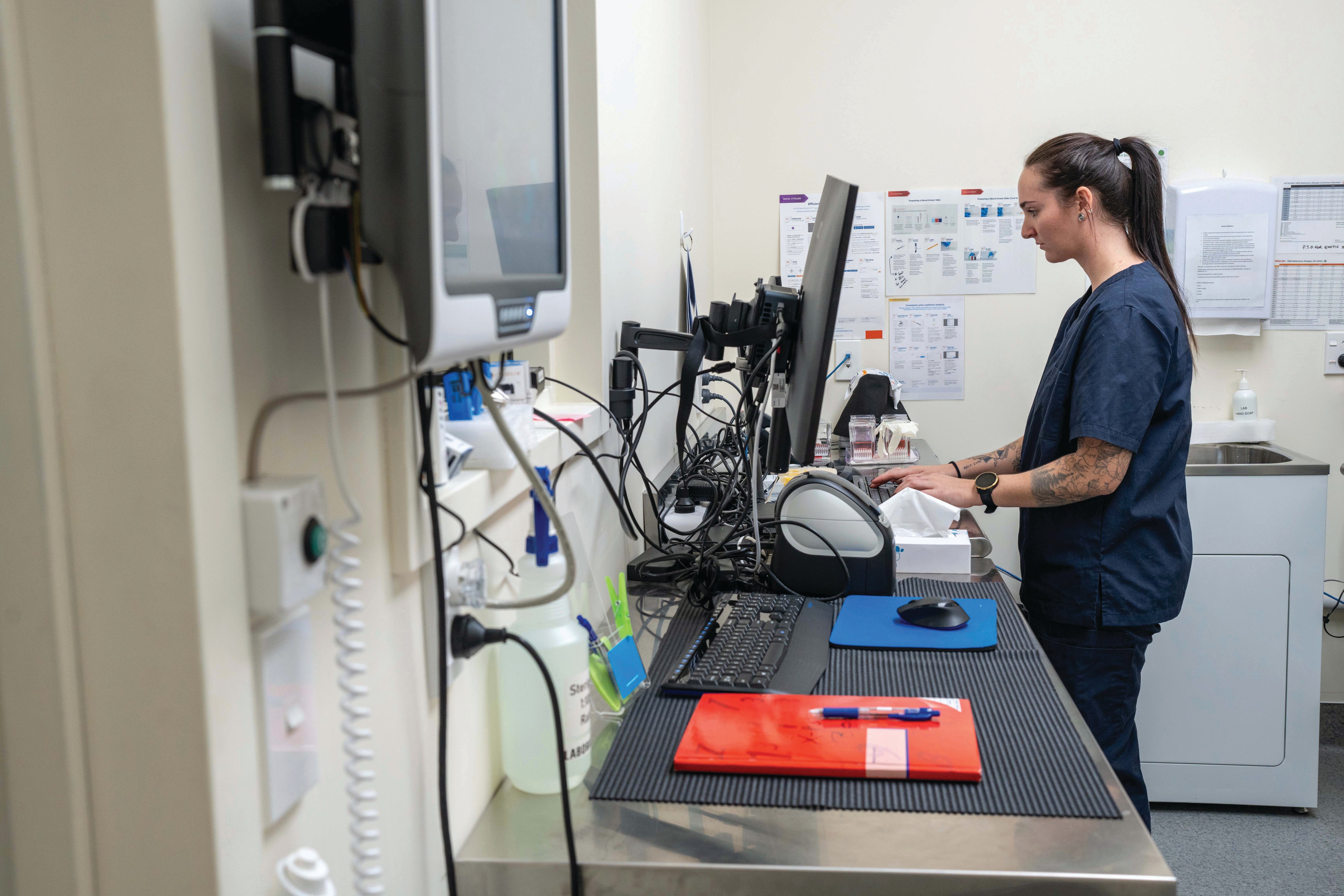
The Association for Diagnostics & Laboratory Medicine (ADLM) released a new policy report, “Artificial intelligence in laboratory medicine: Leveraging laboratory expertise to improve patient care,” outlining how laboratory quality systems can support the responsible implementation and governance of artificial intelligence (AI) across healthcare.
In the report, ADLM emphasizes that clinical AI raises many of the same quality and patient safety questions that laboratories routinely address when implementing diagnostic tests.
Laboratory medicine already operates within mature quality-management and regulatory frameworks that emphasize validation, quality assurance, continuous monitoring, proficiency testing, documentation, and accountability. Laboratory professionals routinely oversee complex diagnostic systems, manage large volumes of clinical data, evaluate analytical performance, and provide consultation regarding the appropriate interpretation and use of diagnostic information. ADLM argues that this expertise positions laboratories to serve as foundational governance and operational partners as AI becomes more integrated into patient care.
Despite this alignment, many healthcare AI tools are currently implemented through fragmented operational models that exist outside established laboratory governance structures. AI applications are frequently deployed as laboratory- or locally developed solutions managed through research, information technology, or vendor-controlled environments rather than through coordinated clinical quality systems.
ADLM recommends that policymakers and healthcare organizations establish risk-based governance frameworks, require independent validation and post-deployment monitoring, develop external quality-assessment and benchmarking programs, promote laboratory data harmonization and interoperability, and support workforce development. The report also calls for payment policies that recognize both the clinical value of AI and the resources required to govern it responsibly.
ASCP study advocates for improved financial support of the laboratory workforce
A recent study from the American Society for Clinical Pathology (ASCP) and the ASCP Board of Certification highlights the financial challenges facing students and professionals pursuing careers in laboratory medicine and underscores the need for continued advocacy around educational funding in this field.
The U.S. Bureau of Labor Statistics projects 22,600 position openings for clinical laboratory technicians each year between 2024 and 2034. For decades, there have been ongoing concerns about the sufficiency of the supply of laboratory professionals to meet demand.
Despite persistent workforce shortages in laboratory medicine, little national data exists on how students and professionals finance their laboratory education or how educational costs may affect entry into and retention within the profession. This data gap complicates advocacy efforts, including efforts to secure eligibility for federal and state grants and student debt reduction programs for laboratory professionals.
To assess the cost of laboratory education and the funding sources students use to finance their training, researchers conducted a national cross-sectional survey of 2,422 laboratory professionals, educators, and current or recent students across the United States and its territories. Researchers analyzed respondents’ educational costs, financing methods, and student loan participation, including factors associated with reliance on student loans.
The study found that the cost of attending a laboratory education program generally falls at or below the lower end of national averages for educational expenses among students and working laboratory professionals. However, the study also determined that respondents most often relied on personal funds, federal student loans, and private loans to complete their education.
The researchers recommended continued advocacy to ensure that laboratory professionals remain included in federal and state scholarships, grants, and loan forgiveness programs. Doing so will strengthen pathways into laboratory careers, ultimately securing recruitment and retention, the researchers said.
CMS and CDC seek feedback on potential CLIA updates
The Centers for Medicare & Medicaid Services (CMS) and Centers for Disease Control and Prevention (CDC) issued a request for information (RFI) seeking feedback on potential updates to CLIA regulations. The RFI does not propose specific regulatory changes but could inform future efforts to modernize the federal standards governing clinical laboratory testing.
Laboratory technology has evolved considerably since CLIA regulations were implemented in 1992. The CMS and CDC are exploring whether regulatory changes may be needed to better reflect current laboratory practices, emerging technologies, and new testing methodologies. Feedback gathered through the RFI could help shape future rulemaking efforts.
The RFI covers a wide range of issues relevant to laboratory professionals, including laboratory developed tests, next-generation sequencing, artificial intelligence, data-only facilities, laboratory personnel requirements, cybersecurity, and emergency preparedness.