Description
As laboratories face increasing pressure to improve quality while managing staffing and resource constraints, automation and digitalization offer new opportunities to address gaps in the preanalytical phase of testing. In this webinar, internationally recognized expert Giuseppe Lippi will review current evidence on preanalytical errors and discuss emerging trends in automation and digitalization. A panel of laboratory leaders will share real-world experiences and practical insights on implementation, barriers to adoption, and measurable outcomes. Participants will gain knowledge to help evaluate, prioritize, and implement tools that support error reduction, workflow optimization, and improved patient care.
Target audience
This activity is designed for lab supervisors, lab directors (and/or assistant directors), lab managers (supervisory and/or non-supervisory), and other laboratory professionals overseeing/conducting within this topic.
Learning objectives
At the end of this session, participants will be able to:
- Clearly define common preanalytical errors and the burdens they place on the lab.
- Demonstrate how automation and digitization can provide measurable solutions.
- Describe ways innovation can benefit the laboratory: workflow efficiency, error reduction, improved patient outcomes.
- Recall expert insights grounded in real-world experience.
Faculty
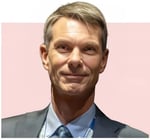 Giuseppe Lippi, MD
Professor of Clinical Biochemistry
University of Verona
Verona, Italy
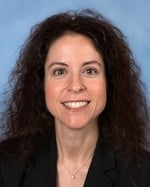 Brooke Katzman, PhD
Medical Director, Hospital Clinical Laboratory, Central Clinical Laboratory, Point of Care, and Laboratory Services; Assistant Professor of Laboratory Medicine and Pathology
Mayo Clinic
Rochester, Minnesota
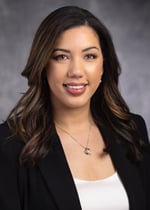 Jaime Noguez, PhD, DABCC
Section Head - Clinical Chemistry, Diagnostic Immunology, Biochemical Genetics
University Hospitals Cleveland Medical Center
Cleveland, Ohio
Disclosures and statement of independence
The Association for Diagnostics & Laboratory Medicine (ADLM) is dedicated to ensuring balance, independence, objectivity, and scientific rigor in all educational activities. All participating planning committee members and faculty are required to disclose to the program audience any financial relationships related to the subject matter of this program. Disclosure information is reviewed in advance in order to manage and resolve any possible conflicts of interest. The intent of this disclosure is to provide participants with information on which they can make their own judgments.
The following faculty reported financial relationships:
- Brooke Katzman, PhD
- Consulting Fees: Becton, Dickinson and Company (BD); Greiner Bio-ONE
- Patents: Vitestro Aletta Autonomous Robotic Phlebotomy; Device Fainting Detection
- Jaime Noguez, PhD, DABCC
- Committee, Board, and/or Advisory Board Membership: Greiner Medical Advisory Board
The following faculty reported no financial relationships:
- Giuseppe Lippi, MD
Content validity
All recommendations involving clinical medicine are based on evidence accepted within the profession of medicine as adequate justification for their indications and contraindications in the care of patients; AND/OR all scientific research referred to or reported in support or justification of a patient care recommendation conforms to generally accepted standards of experimental design, data collection, and analysis.
Accreditation statement
This activity is approved for 1.0 ACCENT® continuing education credits. Activity ID #4554. This activity was planned in accordance with ACCENT® Standards and Policies.
Successful completion statement
Verification of Participation certificates are provided to registered participants based on completion of the activity, in its entirety, and the activity evaluation. For questions regarding continuing education, please email [email protected].