
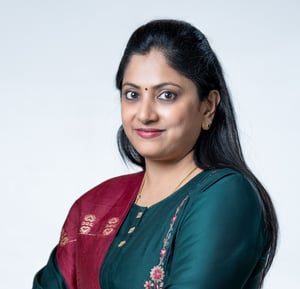
Sathya Selvarajan, MD, PhD (Biochemistry), is the consultant in clinical biochemistry and quality manager at the Department of Laboratory Medicine, MGM Healthcare, Chennai, Tamil Nadu, India. She oversees laboratory quality systems and accreditation, driving continuous improvement in diagnostic accuracy and patient safety. Her work emphasizes evidence-based practice and strengthening the role of laboratory medicine in clinical decision-making.
Request Sathya Selvarajan to speak at your event
Abstract 1
Building quality beyond compliance: Integrating ISO 15189: 2022, NABH, and JCI Frameworks in the Clinical Laboratory
As Quality Manager at MGM Healthcare, I have led the transition of our laboratory to full compliance with ISO 15189:2022, while simultaneously integrating laboratory operations within NABH and JCI accreditation frameworks. This presentation distills that journey — moving beyond checklists to cultivating a culture of shared accountability and continual improvement.
The session explores how our team converted documentation into process-linked workflows, introduced risk-based internal audits, and embedded CAPA tracking directly into our quality review meetings. I share examples of practical innovations we implemented: a risk dashboard, a color coded Quality indicators dashboard with trendlines and improvement of benchmarks, and a one-page CAPA summary template that links findings directly to patient safety indicators.
A key emphasis is on harmonization — ensuring that ISO, NABH, and JCI requirements complement rather than duplicate one another. Real-world data will illustrate measurable outcomes, such as improved EQAS performance, faster corrective action closure, and enhanced staff participation in quality meetings.
This talk aims to help laboratories translate accreditation standards into sustainable systems, focusing on behavioral change and leadership alignment. Attendees will leave with adaptable tools and frameworks to strengthen quality systems across settings, echoing ADLM’s mission of advancing global excellence in diagnostics and patient safety.
Abstract 2
Interpreting biochemistry with purpose: Transforming laboratory data into clinical insight
In modern diagnostics, the true value of laboratory medicine lies in interpretation, not instrumentation. Drawing on my experience supervising reporting benches and postgraduate training, this session presents a structured approach to context-based biochemical interpretation that enhances clinician–laboratory communication and patient outcomes.
Through real case scenarios — such as hypercalcemia with preserved renal function, low albumin with elevated gamma fraction, and discordant thyroid and glycemic indices — I illustrate how interpretive comments can change clinical decisions. The session details how our laboratory designed evidence-linked reporting templates, standardized interpretive language across sections, and measured clinician feedback to evaluate impact.
The discussion includes strategies for avoiding over-interpretation, managing inter-observer variation, and aligning post-analytical quality with international standards. Participants will also explore how LIS-driven analytics and AI tools can assist in generating consistent interpretive narratives.
This talk advocates for redefining laboratory reporting as a clinical dialogue, supported by IFCC and ADLM guidance on interpretive commenting. It aims to empower laboratory professionals to transition from data providers to diagnostic partners — strengthening the post-analytical phase as a critical pillar of global laboratory excellence.
Abstract 3
Leading quality in resource-variable settings: Practical strategies for sustainable laboratory excellence
High-quality diagnostics should not depend on geography or resources. Through my experience managing a tertiary-care laboratory accredited under ISO 15189:2022, NABH, and JCI, I have learned that sustainable quality comes from adaptability and people-centered leadership rather than expensive technology.
This presentation focuses on practical strategies for maintaining laboratory quality in resource-variable settings. Using examples from process optimization at MGM Healthcare, I describe how we built in-house audit templates, low-cost internal quality control systems, and staff engagement programs that reduced non-conformities and improved EQAS performance.
The session will cover three key themes:
- Human Factors: empowering staff to identify risks and participate in CAPA tracking;
- Smart Resource Utilization: repurposing existing equipment and designing internal controls for lean operations;
- Sustainability: embedding training, documentation, and monitoring into daily workflows.
Real data from implementation cycles will show measurable improvements in turnaround time, staff satisfaction, and error reduction.
This talk aims to provide replicable tools for laboratories in similar environments worldwide, fostering a network of shared learning. It aligns directly with ADLM’s mission to strengthen diagnostic quality globally through collaboration, capacity-building, and context-sensitive innovation.