Description
This webinar showcases finalist teams from the 2025 ADLM Data Science Challenge, LabDocs Unlocked, who developed generative AI tools to extract information from complex laboratory document stores. Through live demonstrations and competition, participants will observe how different LLMs (e.g., GPT, Gemini, DeepSeek, AWS Nova, Grok) perform in a real laboratory application using retrieval-augmented generation. Presentations will highlight design decisions related to local deployment, data security, explainability, and integration into laboratory workflows.
By directly comparing approaches and engaging the audience through interactive scoring or voting, the session reinforces best practices in laboratory data science while helping participants develop the judgment needed to select and apply generative AI tools responsibly in their own institutions.
Target audience
This activity is designed for lab directors (and/or assistant directors), lab managers (supervisory and/or non-supervisory), medical technologists, pathologists, fellows, residents, in-training individuals, and other laboratory professionals overseeing/conducting within this topic including compliance and quality staff, informaticists and data scientists.
Learning objectives
At the end of this session, participants will be able to:
- Explain the strengths and limitations of foundation LLMs in laboratory medicine, particularly when domain-specific, proprietary, or protected health information is required
- Describe how retrieval-augmented generation (RAG) and in-context learning can improve reliability, transparency, and cost-effectiveness compared with standalone foundation models.
- Identify best practices for developing laboratory-focused generative AI tools, including model selection, explainability, security considerations, and software development standards.
Faculty
Co-Moderators
 Mark Zaydman, MD, PhD
Associate Professor, Pathology and Immunology
Washington University School of Medicine
St. Louis, MO
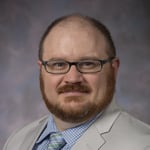 Dustin Bunch, PhD, DABCC, FADLM
Director, Laboratory Informatics & Data Analytics
Assistant Director, Clinical Chemistry
Nationwide Children's Hospital
Associate Professor, Clinical, College of Medicine
The Ohio State University
Columbus, OH
Finalists
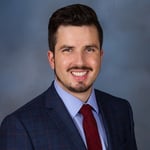 Mikael Guzman Karlsson, MD, PhD
Clinical Informatics Fellow, Baylor College of Medicine
Texas Children's Hospital
Houston, TX
 Jonathan Montgomery, BS
Systems Specialist
Indigo BioAutomation
Denver, CO
Disclosures and statement of independence
The Association for Diagnostics & Laboratory Medicine (formerly AACC) is dedicated to ensuring balance, independence, objectivity, and scientific rigor in all educational activities. All participating planning committee members and faculty are required to disclose to the program audience any financial relationships related to the subject matter of this program. Disclosure information is reviewed in advance in order to manage and resolve any possible conflicts of interest. The intent of this disclosure is to provide participants with information on which they can make their own judgments.
The following faculty reported financial relationships:
- Mark Zaydman, MD, PhD
- Honorarium and/or Expenses: Diasorin and Siemens
- Consulting Fees: Diasorin and Siemens
- Grant and/or Research Support: BioMerieux and Sebia
- Committee, Board, and/or Advisory Board Membership: Diasorin
- Jonathan Montgomery, BS
- Salary: Indigo BioAutomation
The following faculty reported no financial relationships:
- Dustin Bunch, PhD, DABCC, FADLM
- Mikael Guzman Karlsson, MD, PhD
Content validity
All recommendations involving clinical medicine are based on evidence accepted within the profession of medicine as adequate justification for their indications and contraindications in the care of patients; AND/OR all scientific research referred to or reported in support or justification of a patient care recommendation conforms to generally accepted standards of experimental design, data collection, and analysis.
Accreditation statement
This activity is approved for 1.0 ACCENT® continuing education credits. Activity ID #4496. This activity was planned in accordance with ACCENT® Standards and Policies.
Successful completion statement
Verification of Participation certificates are provided to registered participants based on completion of the activity, in its entirety, and the activity evaluation. For questions regarding continuing education, please email [email protected].