Description
Despite technological advancements, pre-analytical errors continue to jeopardize patient safety and operational efficiency. Many laboratories struggle to transition AI from a theoretical research interest into a functional clinical tool.
This webinar features a conversation between Dr. Mark Zaydman and Dr. Nick Spies, who will share their experience developing and deploying clinical algorithms for pre-analytical error detection. The session will walk through the lifecycle of a specific clinical algorithm, outlining the technical and logistical hurdles of implementation.
Participants will:
- Learn how to navigate the complexities of data drift and software integration
- Discover the strategic benefits of collaborating with industry partners to scale AI solutions
- Gain a practical roadmap for leveraging AI to safeguard the earliest—and most vulnerable—stage of laboratory testing.
Target audience
This activity is designed for physicians, lab supervisors, lab directors (and/or assistant directors), lab managers (supervisory and/or non-supervisory), medical technologists, pathologists, toxicologists, fellows, residents, in-training individuals, informatics laboratory directors, clinical data science leads, middleware/LIS specialists, and other laboratory professionals overseeing/conducting within this topic.
Learning objectives
At the end of this session, participants will be able to:
- Identify specific pre-analytical error types that are most amenable to AI-driven detection and intervention.
- Evaluate the technical and regulatory challenges of moving a machine learning algorithm from a research prototype to a validated clinical workflow.
- Describe how strategic partnerships between clinical laboratories and industry vendors can accelerate the adoption and maintenance of AI tools.
Faculty
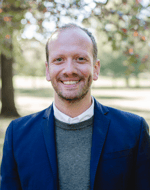 Mark A. Zaydman, MD, PhD, DABPath
Associate Professor of Pathology and Immunology
Washington University School of Medicine
Saint Louis, MO
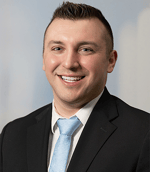 Nicholas Spies, MD
Medical Director, Applied AI and Clinical Chemistry
ARUP Laboratories Assistant Professor
University of Utah
Disclosures and statement of independence
The Association for Diagnostics & Laboratory Medicine (ADLM) is dedicated to ensuring balance, independence, objectivity, and scientific rigor in all educational activities. All participating planning committee members and faculty are required to disclose to the program audience any financial relationships related to the subject matter of this program. Disclosure information is reviewed in advance in order to manage and resolve any possible conflicts of interest. The intent of this disclosure is to provide participants with information on which they can make their own judgments.
The following faculty reported no financial relationships:
- Nicholas Spies, MD
The following faculty reported financial relationships:
- Mark A. Zaydman, MD, PhD, DABPath
- Honorarium and/or Expenses: Luminex, Sebia
- Consulting Fees: Luminex, Sebia
- Grant and/or Research Support: Roche, Sebia, Biomerieux
- Committee, Board, and/or Advisory Board Membership: Luminex
- Income from IP, Patents, and/or Royalty: Columbia Instruments
Content validity
All recommendations involving clinical medicine are based on evidence accepted within the profession of medicine as adequate justification for their indications and contraindications in the care of patients; AND/OR all scientific research referred to or reported in support or justification of a patient care recommendation conforms to generally accepted standards of experimental design, data collection, and analysis.
Accreditation statement
This activity is approved for 1.0 ACCENT® continuing education credits. Activity ID #4520. This activity was planned in accordance with ACCENT® Standards and Policies.
Successful completion statement
Verification of Participation certificates are provided to registered participants based on completion of the activity, in its entirety, and the activity evaluation. For questions regarding continuing education, please email [email protected].