Description
In this webinar, you’ll gain a high-level understanding of quantum computing (QC) and quantum machine learning (QML) to support interpretation of the associated manuscript. The session will include:
- An introduction to quantum computing and QML, and the current state of these fields.
- An overview of the manuscript and its key findings, including how this work relates to prior research from our group.
- A discussion of potential future directions for clinical informatics research in laboratory medicine.
By the end of the webinar, attendees will have the foundational knowledge to understand this work and its potential future applications in QC and QML, encouraging future research as advances in these technologies and their adoption warrant.
Read the article in Clinical ChemistryTarget audience
This activity is designed for physicians, lab supervisors, lab directors (and/or assistant directors), lab managers (supervisory and/or non-supervisory), medical technologists, point-of-care coordinators, pathologists, toxicologists, fellows, residents, in-training individuals, and other laboratory professionals overseeing/conducting within this topic.
Learning objectives
At the end of this session, participants will be able to:
- Describe the concept of “quantum advantage” and explain how it may translate into practical advantages for data analytics compared with classical computing frameworks.
- Summarize the key findings of the recently published study by Durant et al.
- Identify the two primary types of quantum computers currently available for practical use and describe their respective use cases and applications.
Faculty
Moderator
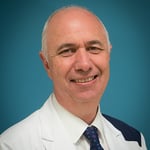 Eric Kilpatrick, MD, FRCPath, FRCPEd
Consultant in Chemical Pathology
Manchester University NHS Foundation Trust
Honorary Professor of Clinical Biochemistry
Hull York Medical School
Manchester, UK
Speaker
 Thomas Durant, MD
Associate Professor
Yale School of Medicine
New Haven, CT
Disclosures and statement of independence
The Association for Diagnostics & Laboratory Medicine (ADLM) is dedicated to ensuring balance, independence, objectivity, and scientific rigor in all educational activities. All participating planning committee members and faculty are required to disclose to the program audience any financial relationships related to the subject matter of this program. Disclosure information is reviewed in advance in order to manage and resolve any possible conflicts of interest. The intent of this disclosure is to provide participants with information on which they can make their own judgments.
The following faculty reported no financial relationships:
- Eric Kilpatrick, MD, FRCPath, FRCPEd
- Thomas Durant, MD
Content validity
All recommendations involving clinical medicine are based on evidence accepted within the profession of medicine as adequate justification for their indications and contraindications in the care of patients; AND/OR all scientific research referred to or reported in support or justification of a patient care recommendation conforms to generally accepted standards of experimental design, data collection, and analysis.
Accreditation statement
This activity will be submitted for 1.0 ACCENT® continuing education credits
Successful completion statement
Verification of Participation certificates are provided to registered participants based on completion of the activity, in its entirety, and the activity evaluation. For questions regarding continuing education, please email [email protected].