
Closing the care gap for gender-diverse patients
July 1, 2026
The elusive search for a roadside cannabis DUI test
July 1, 2026
Five decades on the frontlines of diabetes research
April 28, 2026
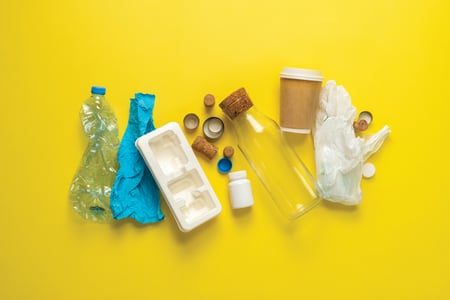
Single-use plastics are widely used in medicine because of their sterile nature, low-cost, and ease of handling. The United States healthcare sector alone generates 1.7 million tons of plastic waste each year (1), with clinical laboratories contributing substantially to the total. A recent analysis of waste generated from running basic metabolic panels on several major analyzer platforms revealed that the majority of waste components were plastic (2). Commonly used plastic items in the lab include syringes, blood collection kits and containers, culture dishes, pipette tips, urine collection cups, cuvettes, gloves, and specimen bags.
Although undoubtedly convenient, plastics pose pressing challenges. From production and distribution to disposal, the entire life cycle of plastic contributes significantly to rising carbon emissions. Additionally, as the worldwide population grows, so does the demand for medical services. This surge, combined with advances in diagnostic technologies and an expanding menu of available tests, has led to a dramatic increase in laboratory testing — and a corresponding rise in plastic waste.
The potentially hazardous nature of medical waste adds to these complexities. In most cases, such waste is incinerated to eliminate harmful pathogens. Although this process reduces the volume of waste by up to 90%, incineration can release toxic chemicals, including carcinogenic dioxins and furans, into the environment. Discarding healthcare waste in landfills is a cheaper alternative, but that approach also comes with problems (3). Nonbiodegradable plastic waste eventually breaks down into smaller particles called microplastics, which have been linked directly to infertility, multiple endocrine disorders, and increased risk of cancer (4).
Given that experts predict plastic production will triple by 2060, plastic pollution is an escalating global crisis. This article describes how clinical lab professionals can critically examine laboratory waste streams, identify opportunities to prevent and reduce plastic use, and adopt safe, sustainable alternatives appropriate for healthcare settings.
To address the plastic crisis, experts urge a societal shift away from the traditional linear economy, characterized as a “take, make, waste” model, toward a circular approach that involves extending the lifecycle of materials through reuse and recycling.
Echoing this philosophy, the World Health Organization promotes a waste-management hierarchy that ranks methods ranging from least to most desirable as: disposal, recycling, reuse, reduction, and prevention (5). By prioritizing prevention and reduction, this framework supports sustainable practices that align with the principles of a circular economy.
So, where do clinical laboratories fit in? They can contribute meaningfully by promoting responsible and appropriate test utilization. Estimates show that each year, labs conduct about 4 to 5 billion medical tests, and studies suggest that 40%–60% of them may be unnecessary (6). Although the financial costs of excessive testing are discussed often, the environmental consequences — particularly the waste footprint — are mostly overlooked.
Erroneous lab results can lead to repeat testing or unnecessary follow-up testing, which in turn contributes to increased waste generation — not to mention compromising patient care and driving up healthcare costs. For laboratory staff and other healthcare professionals, education and ongoing retraining have been shown to reduce the occurrence of these errors.
Research indicates that 60%−70% of laboratory errors occur at the preanalytical phase, or before samples even reach the lab. Primarily stemming from manual processes, preanalytical errors can encompass a range of issues, including incorrect test requests, problems with test naming, mistakes related to patient preparation and sample collection, mislabeling, and mishandling or improper transportation of specimens.
Laboratorians can partner with clinicians and optimize clinical decision support systems to reduce the likelihood of these problems. For example, electronic medical record systems can be modified to remove the option to order daily labs by default or to alert clinicians when recent results for a test remain stable.
Collaborating with providers also can improve sustainability. With rapidly expanding test menus, it is understandable that clinicians experience uncertainty and challenges when ordering tests and interpreting results. Lab professionals must make themselves accessible for consultations to reinforce appropriate test utilization and provide expert input as needed (7).
They can also help promote sustainable quality control (QC) procedures. Although QC plays a vital role in ensuring accurate and reliable results, traditional methods often produce significant waste. For instance, conventional QC involves aliquoting liquid samples into separate cups for analysis, adding steps and materials to the workflow.
However, newer QC systems use tubes that can be scanned directly and loaded onto analyzers, eliminating the need for aliquoting (8). This not only streamlines the process, but also reduces plastic and improves overall lab efficiency. As these innovations become more accessible, lab leaders should reassess their QC requirements for each analyte and adopt approaches that balance accuracy with sustainability.
Recent studies have shown that small-volume blood collection tubes can reduce transfusions in intensive care. Similarly, the choice of blood collection tube sizes also can make a huge impact on plastic waste. A recent letter to the editor of a clinical chemistry journal, which centered on diagnostic stewardship around vitamin D test ordering, showed that switching from 5 mL to 3.5 mL tubes could result in substantial plastic avoidance. Over a 1-year period, this minor 1-g difference in plastic between the two tube sizes resulted in a cumulative estimate of 98,820 g of plastic saved (9).
When prevention is not feasible, reusing materials offers another sustainable solution for clinical laboratories. However, this practice must be carefully managed to minimize the risk of contamination and ensure patient safety. Glass items, for example, can be cleaned and sterilized for repeated use, reducing reliance on single-use plastics. And when appropriate safeguards are in place, refillable pipette tips can be viable alternatives to pre-loaded tip boxes.
That said, the shift to reusable materials comes with trade-offs. Cleaning and sterilization processes consume water and electricity, which contribute to carbon emissions and operational costs. They can also increase the workload for laboratory staff, potentially requiring additional personnel. Although reusability should be encouraged, it must be balanced with practical considerations of overall cost, resources, accuracy, and safety.
Recycling waste also should be considered wherever possible. One study found that, over the course of a year, approximately 21% of the waste produced from conducting complete metabolic panels was recyclable, consisting of paper, plastic, cardboard, and other materials labeled with appropriate recycling codes (10).
In healthcare settings, plastic waste is rarely recycled due to concerns about contamination with hazardous biochemical substances or biological fluids. For example, blood collection tubes — a major source of plastic waste in clinical laboratories — are not commonly recycled. Institutions and manufacturers have recognized this issue and are researching the use of blood collection tubes made of plastics that can be safely recycled following decontamination (11). Laboratorians should champion innovative approaches like this, promote them within our community, and encourage manufacturers to adopt similar sustainable practices.
With demand comes supply, and clinical laboratories must take the lead in demanding sustainable products. Vendors and manufacturers increasingly recognize the need and the growing demand for sustainability in laboratory medicine. For instance, clinical chemistry analyzers often rely on plastic reagent packs designed for a fixed number of tests. Our studies have identified these packs as a significant source of plastic waste, especially since they cannot be recycled because of contamination with biohazardous materials (2,10).
We know of at least one vendor that has approached this by increasing the number of tests per pack, thereby reducing the overall volume of plastic waste generated. Lab leaders can use request-for-proposal processes as a strategic opportunity to prioritize vendors committed to environmentally responsible practices.
Labs can also take advantage of emerging resources that provide third-party verification of products’ environmental impact. For example, some manufacturers have adopted the ACT Ecolabel 2.0, developed by the nonprofit organization My Green Lab, to transparently communicate key information through an easy-to-read label.
Additionally, clinical labs can incorporate sustainability criteria into their procurement guidelines and prioritize suppliers and vendors who use eco-friendly materials, streamline water and energy usage, minimize plastic in products and packaging, and provide recycling or take-back programs. By doing so, they not only align purchasing decisions with sustainability goals, but also help catalyze broader industry shifts toward greener standards.
As healthcare demands continue to rise, the need for environmentally responsible practices will only intensify. Reducing our dependence on plastic limits the environmental impact of plastic production. Moving forward, meaningful progress will require innovation, policy reform, and a unified commitment to sustainability across the healthcare sector. Lab professionals can play a lead role in driving this transformation.
Seema Khattri Bhandari, PhD, is a clinical chemistry fellow in the department of pathology, microbiology, and immunology at Vanderbilt University School of Medicine in Nashville, Tennessee. +Email: [email protected]
Joe R. Wiencek, PhD, DABCC, FADLM, is an associate professor at Vanderbilt University School of Medicine and service line medical director of the core laboratory at Vanderbilt University Medical Center. +Email: [email protected]
Read the full March-April 2026 issue of CLN.