
Lathyrism
By Miranda Chimzar, MD
Published in the September 2025 issue of Clinical & Forensic Toxicology News
During late December 1942, in the Romanian concentration camp of Vapniarka, prisoners began falling ill with abnormal gait and brisk reflexes (1). Doctors imprisoned at the camp diagnosed them with spastic paralysis. The symptoms were linked to the food being served to the prisoners when it was noted that the guards remained healthy and the symptoms were not contagious. Thanks to an extensive education campaign, the inmates were alerted to avoid eating the gruel made from grass peas (Lathyrus sativus, Fig. 1), which helped to prevent further morbidity and mortality. It is estimated that 600 to 800 of the 1200 men, women, and children at the camp developed symptoms.
Lathyrism is the general term for symptoms caused by eating certain legumes of the genus Lathyrus (1). Within the genus Lathyrus, there are over 160 species, 20 of which produce the compound Oxalyl-diamino-propionic acid (ODAP), which produces neurologic symptoms in humans and animals (2). These neurologic symptoms of lathyrism are further classified as neurolathyrism and are most commonly associated with the plant Lathyrus sativus. Other tissues, such as bones (osteolathyrism) and vasculature (angiolathyrism), can also be affected (3). Osteolathyrism has primarily been seen in animals and is associated with different species of the plant, Lathyrus odoratus, hirsutism, and pusillus (1).
Lathyrism has been reported as early as 46 BC by Hippocrates and in ancient Hindu writings (3). Hippocrates wrote, “At Ainos, all men and women who ate peas continuously became impotent in the legs and that state persisted.” Hindu texts mention that a certain legume could “cause a man to become lame and crippled and it irritates the nerves.” The symptoms were severe enough to lead the Duke of Würtemberg to forbid the consumption of bread made from the flour of lathyrus peas in 1671. Bans such as these remain in some countries even today (4).
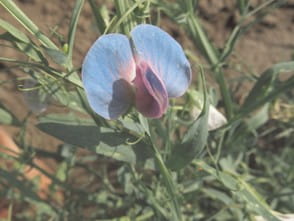
Figure 1. Grass pea (Lathyrus sativus). Photo courtesy of Professor Patricia Henderson from the article Grass Pea (Lathyrus sativus) https://colostate.pressbooks. pub/understudiedindigenouscrops/chapter/grass-pea/. Photo by K. Chen.
Lathyrus sativus is a drought-tolerant crop that can be grown in sand or clay and is tolerant to pests and disease (4). It is usually made into gruel or ground into flour and provides protein, carbohydrates, iron, zinc, magnesium, folate, and vitamin C. These factors have led to continued interest in using Lathyrus sativus as a food source. Recent studies have suggested that environmental factors such as osmotic stress and heavy metals in the soil lead to high ODAP content, and correcting these conditions may enable the plant to be eaten safely (4). Other agriculturists have seen promise in toxin reduction through breeding with wild relatives (2). Findings like these have led to bans being lifted in recent years (4).
The toxic compound that causes neurolathyrism is ODAP (4). Additional nomenclatures for the compound include beta-N-oxalytlamino-L-alanine and L-3-oxalyl amino-2-amino-propionic acid. ODAP is found in two isomeric forms, a and b , with b -ODAP accounting for 95% of the toxin produced in Lathyrus sativus (2). The excitotoxic amino acid is an analog of L-glutamic acid and acts on the AMPA-type glutamate receptor (a-amino-3- hydroxy-5-methy-4isoxazole propionate) (5). Stimulation of the receptor leads to calcium influx, oxidative stress, and eventually motor neuron damage and cell death (4). With prolonged consumption of Lathyrus sativus, the toxin’s effects build up in the body, leading to symptoms of lathyrism.
The compound responsible for osteolathyrism and angiolathyrism is beta-amino-propionitrile (3). BAPN has not been shown to have any neurolathyritic effects. It is thought that BAPN causes increased connective tissue fragility, leading to weakening of the elastic fibers in arteries and alterations in bone development.
Symptoms of lathyrism usually present within months to years of prolonged consumption of the plant (4). Those affected by neurolathyrism demonstrate spastic paralysis predominantly of the lower portion of the body along with pain, cramps, tremors, frequent urination, and impotence (6). Symptoms tend to be especially disruptive at night. A physical examination often shows clonus, muscle rigidity, muscle atrophy, and a positive Babinski’s sign, but largely retained sensation (3). Osteolathyrism may present with fusion of epiphyses and bowing of the femur (1). Young men tend to be affected more than other demographics, but the development of symptoms depends on the amount and duration of consumption, genetics of the plant and consumer, malnutrition such as vitamin B6 deficiency, and growing conditions (4). There is no treatment for lathyrism; those affected receive supportive care for their symptoms (6).
Following the devastation at Camp Vapniarka, neurologists were able to follow a cohort over 30 years to track the effects of chronic lathyrism (1). All the patients followed had spastic paralysis with gait disturbances such as scissoring gait with stiff legs, walking on the balls of their feet, and often requiring canes, crutches, or even wheelchairs for mobility. The gait abnormalities were primarily due to increased tone in the thigh extensors and adductors, and gastrocnemius muscles. Only a few patients had involvement of the upper limbs, and the neurogenic bladder symptoms lessened in the chronic stage of the disease.
As a grain, Lathyrus species have been used to feed livestock. These animals, including cows, sheep, pigs, chickens, and horses, are also susceptible to developing lathyrism, showing muscular weakness of the loins and extremities, paralysis, lack of coordination, thickening of the arterioles and capillaries within the spinal cord, and dissecting aneurysms (3, 4). Different animals show varying degrees of susceptibility (3). Horses are extremely sensitive to toxins and may even die from exposure. Feeding a horse a diet of 20% Lathyrus sativus results in symptoms, while pigs and cattle tolerate higher amounts.
ODAP and beta-amino-propionitrile are not common compounds tested for in the laboratory. Lathyrism is a clinical diagnosis made using a thorough physical exam and dietary history. Neurologic imaging and electromyographic studies may be helpful, but are often not specific (6). Histologic studies in humans demonstrate anterolateral sclerosis in the dorsolumbar spinal cord and decreased numbers of Betz’s cells in the primary motor cortex (3). Partial degeneration of the motor tracts of the spinal cord, along with microgliosis in the anterior horn and lateral cords, has been appreciated in animal models.
Miranda Chimzar, MD, is a cytopathology fellow in the department of pathology at the University of Utah, ARUP Laboratories in Salt Lake City, Utah.
The author has nothing to disclose.
The sweet pea is a member of the Genus, Lathyrus. The plant known as Lathyrus sativus (grass pea) if ingested in sufficient quantity causes a condition know as lathyrism. This condition is has the same signs and symptoms as copper deficiency. The toxin produced by several members of the genus Lathyrus is 3 β-N-oxalyl-L-α,β-diaminopropionic acid (β-ODAP).
Scientific Classification: Kingdom - Plantae, Division - Magnoliophyta, Class - Magnoliopsida, Order - Fabales, Family - Fabaceae, Subfamily - Faboideae, Tribe - Vicieae, Genus - Lathyrus
The genus Lathyrus is known as vetchling or wild pea. There are over 100 species of Lathyrus with varying degrees of toxicity. The most common species known to home gardeners is Lathyrus odoratus, the common sweet pea. Much of the popularity of this plant can be attributed to Harry Eckford, gardener for the Earl of Radnor in the late 19th century. He developed over 100 cultivars of the plant before is death in 1906. Today a large number of cultivars are available from seed houses that specialize in their production including Bodger Seeds Ltd. Two of the more common species associated with worldwide poisonings are Lathyrus sativus and Lathyrus cicera. Outwardly, some of the vetches, (genus Vicia) may resemble the members of the genus Lathyrus. With the latter, a good diagnostic feature would be to look at the style which will be flattened with hairs on one side while with vetch flowers, the style will be needle-like but with a ring of hairs about 1 mm wide all around the tip.
Worldwide: Human poisonings are a result of ingestions of large amounts of the Lathyrus sativus or Lathyrus cicera plants in either the raw form or as bread made from flour ground from the seeds of the plants. Both of these species are cultivated for food especially in India and Ethiopia. Pulses by definition are annual leguminous crops yielding from one to twelve grains or seeds of variable size, shape and color within a pod. Pulses are used for food and animal feed. The constituents within pulses may change depending on economics and growing conditions. Lathyrus sativus know as grass pea is an important crop in areas where other food sources are not available because it can survive at low nutrient levels and grows on various different types of soil, including semi-arid regions with low fertility. The plant lives in symbiosis with Rhizobium (nitrogen-fixing bacteria in the root nodules) and in this way adds nitrogen to the soil. In India the plant grows up to 1300 metres above sea level. In Ethiopia it can be cultivated up to 3000 metres above sea level. The yield varies from 900 to 1500 kg per hectare. The plant exhibits important morphologic variations. Osmotic stress increases the concentration of poison. Because of these reasons poisonings with occur generally during times of drought and when cereals are not available. Consequently, outbreaks of lathyrism have occurred repeatedly throughout history and, today, tens of thousands affected during recent epidemics in Ethiopia, India, and Bangladesh, are permanently crippled. In parts of Asia and Africa this disease may cripple as many a 2.5 per cent of the population. One such an epidemic occurred in the 1970's, which left one per cent of the people of the vast Gondar region of Ethiopia permanently crippled. Families, even whole communities, are often deprived of their breadwinners, and unable to continue the struggle against starvation.
Some researchers for the UN have concluded that suppling at least one third of the diet with other cereals substantially lessens the chances of lathyrism.
United States: Human poisonings in the US are rare but animal poisonings are the most common form of poisonings where feed has been tainted with wild peas. Animals, chiefly horses, develop paralysis of their hind legs if they are given Lathyrus regularly as fodder. Interestingly it is now being actively marketed as AC Greenfix, a variety of chickling vetch (Lathyrus sativus L.) also known as a grass pea or grassy peavine as a soil enhancer. AC Greenfix is marketed as "a new annual legume in the United States, developed as a fertilizer alternative to supply green manure Nitrogen for both organic and conventional growers." Claims are that in only 8-10 weeks of growth an average of 80-100 lbs N/acre can be produced.
Lathyrus sativus contains β-N-oxalyl-L-α,β-diaminopropionic acid (β-ODAP), which is thought to cause neuronal damage through excitation of the AMPA-activated receptors although some researchers believe the mechanism is more complex. Beta-amino-propionitrile (BAPN) found in lathyrus odoratus (our more common garden sweet pea plant) is thought to be responsible for osteolathyrism, which in humans is quite poorly documented. Patients develop bone pain and disfigurement of bones, including vertebrae and pelvis. This is to be distinguished from Kashin-Beck's disease which is related to selenium deficiency.
The clinical disease lathyrism can be divided into neurolathyrism and osteolathyrism. Neurolathyrism is a neurodegenerative and irreversible spastic paraparesis that can be crippling. The syndrome is characterized by muscular rigidity, weakness, and paralysis of the leg muscles. In severe cases victims may be reduce to crawling. Young men between the ages of 20 and 30 are primarily affected. As early as 400 BC the Indian physician Charak associated eating triputa (L. sativus) with the occurrence of a neurological syndrome.
The related plant Lathyrus odoratus contains the toxic beta-amino-propionitrile (BAPN). Long-term consumption may lead to skeletal changes. The substance BAPN is an irreversible inhibitor of lysyl oxidase, an enzyme necessary for the covalent cross-linking of tropocollagen molecules during the maturation of mature collagen. A metabolic precursor of BAPN is found in the vegetative parts and unripe seeds of L. sativus. It is probably co-responsible for the osteolathyrism which is sometimes seen after consumption of L. sativus. Interestingly copper deficiency produces a similar syndrome since the lysyl oxidase is a copper containing molecule.
Similar toxin, beta-methylamino-L-alanine, is suspected in causing lytico-bodig, a severe neurological disease endemic in Guam, one of the Mariana Islands in the Pacific Ocean.
The Toxin Spotlight is brought to you by ADLM's
