Description
This webinar will introduce MEDUSA (Maintaining Entire DNA Duplexes for Utmost Sequencing Accuracy), a novel, streamlined library preparation method designed to mitigate duplex sequencing errors without sacrificing genome coverage. We will explore the mechanics of how trace dNTP carryover from end repair drives unintended strand resynthesis during dA-tailing, and explain how integrating an apyrase-mediated enzymatic step effectively blocks this resynthesis. Participants will discover how MEDUSA performs across challenging clinical specimens—including formalin-fixed paraffin-embedded tumor DNA and cell-free DNA —achieving ultra-low residual variant frequencies while maintaining ~100% genome coverage and excellent molecular recovery. Attendees will walk away with actionable insights on how to balance absolute sequencing accuracy with complete genomic breadth, making this session essential for anyone looking to optimize liquid biopsies, rare-variant assays, and clinical oncology workflows.
Read the article in Clinical Chemistry.
Target audience
This activity is designed for Physicians, Lab supervisors, Lab directors (and/or assistant directors), Lab managers (supervisory and/or non-supervisory), Medical technologists, Point-of-Care coordinators, Pathologists, Toxicologists, Fellows, Residents, In-training individuals, and other laboratory professionals overseeing/conducting within this topic.
Learning objectives
At the end of this session, participants will be able to:
- Identify the mechanisms by which conventional double-stranded DNA library preparation methods trigger strand resynthesis, artificially propagating single-stranded DNA lesions into duplex sequencing errors.
- Explain the workflow and enzymatic principles of MEDUSA, highlighting the specific role of apyrase in degrading dNTP carryover to block resynthesis while preserving complete genomic coverage.
- Evaluate the clinical utility and performance metrics of MEDUSA when processing low-quality or highly fragmented specimens, such as cfDNA and archival FFPE tissue, for highly sensitive variant detection.
Faculty
Moderator
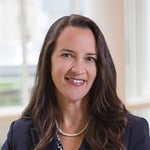 Linnea M. Baudhuin, PhD, DABMGG, FACMG
Professor of Laboratory Medicine and Pathology, Mayo Clinic
Co-Deputy Editor, Clinical Chemistry
Rochester, Minnesota
Speaker
 Azeet Narayan, PhD
Senior Assay Research Scientist, Broad Clinical Labs and Gerstner Center for Cancer Diagnostics
Broad Institute of MIT and Harvard
Cambridge, Massachusetts
Disclosures and statement of independence
The Association for Diagnostics & Laboratory Medicine is dedicated to ensuring balance, independence, objectivity, and scientific rigor in all educational activities. All participating planning committee members and faculty are required to disclose to the program audience any financial relationships related to the subject matter of this program. Disclosure information is reviewed in advance in order to manage and resolve any possible conflicts of interest. The intent of this disclosure is to provide participants with information on which they can make their own judgments.
The following faculty reported financial relationships:
- Azeet Narayan, PhD
- Stocks and/ or Bonds: Transmedics group, TG Therapeutics, Viking Therapeutics, Axsome Therapeutic, Uniqure, CLPT, Ardelyx, Corvus Pharma, Prime Medicine, ARVN, Tempuss
The following faculty reported no financial relationships:
- Linnea M. Baudhuin, PhD, DABMGG, FACMG
Content validity
All recommendations involving clinical medicine are based on evidence accepted within the profession of medicine as adequate justification for their indications and contraindications in the care of patients; AND/OR all scientific research referred to or reported in support or justification of a patient care recommendation conforms to generally accepted standards of experimental design, data collection, and analysis.
Accreditation statement
This activity is approved for 1.0 ACCENT® continuing education credits. Activity ID #4548. This activity was planned in accordance with ACCENT® Standards and Policies.
Successful completion statement
Verification of Participation certificates are provided to registered participants based on completion of the activity, in its entirety, and the activity evaluation. For questions regarding continuing education, please email [email protected].